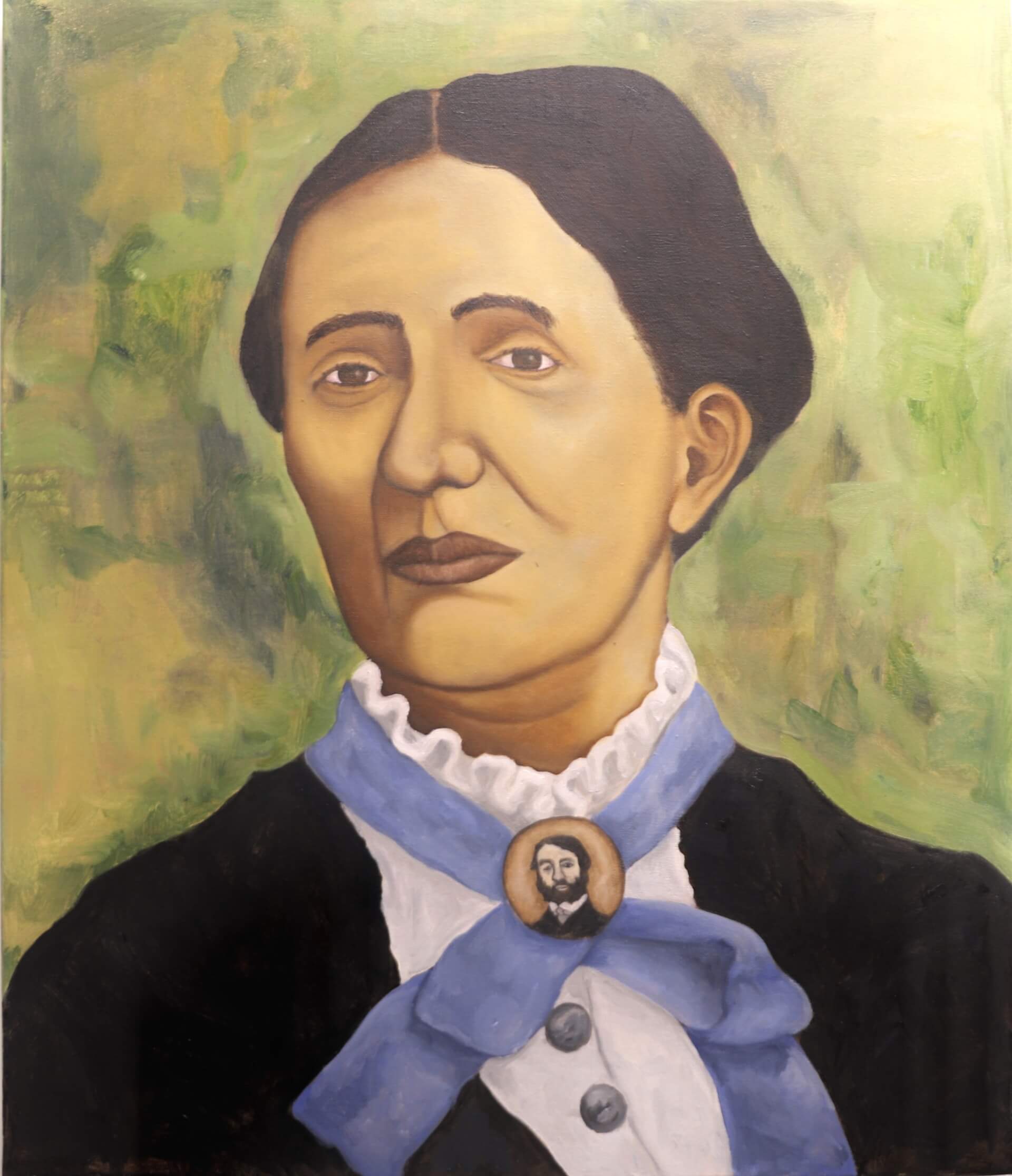
Ellen Craft
Biography
Ellen Craft was a Black American freedom-seeker whose daring escape from slavery captured public imagination on both sides of the Atlantic. Born in Georgia in 1826 to an enslaved Black woman and her white enslaver, Ellen’s light skin meant she was often mistaken for a member of the enslaver’s family. At just 11, she was given as a “wedding gift” to her half-sister in Macon, where she worked as a ladies’ maid.
In 1846, Ellen met William Craft, a skilled carpenter also enslaved. Fearing separation - common under slavery - the couple devised a bold escape. On 21 December 1848, at the age of 22, Ellen disguised herself as a white, disabled male planter travelling north for medical treatment, with William posing as her enslaved valet. Over four tense days, they travelled by train and steamboat, navigating first-class compartments, luxury hotels, and near-exposures – one of them being before the train had even left the station (Ellen’s seatmate was a dear friend of her enslaver). On Christmas Day, they reached Philadelphia and shortly settled in Boston.
However, the 1850 Fugitive Slave Act, which authorised the recapture of escapees even in free states, forced the Crafts to flee again - this time to Britain. They arrived in Liverpool in December 1850, and soon became prominent voices in the abolitionist movement, touring and speaking alongside figures like fellow freedom-seeker William Wells Brown. They settled in Hammersmith, west London, and raised five children in a home that became a hub of anti-slavery and feminist organising.
In 1860, at the age of 34, Ellen co-authored Running a Thousand Miles for Freedom with her husband, detailing their audacious escape. Ellen also participated in women’s suffrage activism and the Freedmen’s Aid Society which provided education and support to formerly enslaved people. After the American Civil War, the Crafts returned to Georgia and established the Woodville Cooperative Farm School to support newly freed Black families, though it was eventually shuttered due to racial hostility and lack of funds. Ellen is believed to have died in Georgia in 1891 at the age of 65. Her life remains a testament to courage, ingenuity, and the enduring fight against slavery and its aftermath.
”I have never had the slightest inclination whatever of returning to bondage; and God forbid that I should ever be so false to liberty as to prefer slavery in its stead. In fact, since my escape from slavery, I have gotten much better in every respect than I could have possibly anticipated. Though, had it been to the contrary, my feelings in regard to this would have been just the same, for I had much rather starve in England, a free woman, than be a slave for the best man that ever breathed upon the American continent.”
-- Ellen Craft, Anti-Slavery Advocate, December 1852